Pay in installments of $5.66 with
 ,
,
 and
and

Shipping Estimate
USA
- USA
- CAN
- USA
- CAN
Ships within 48 hours · Estimated delivery Jul 2 - Jul 7
 Promo Codes Available:
For Your Every Summer RSVP, with Code: SUMMER15
Description
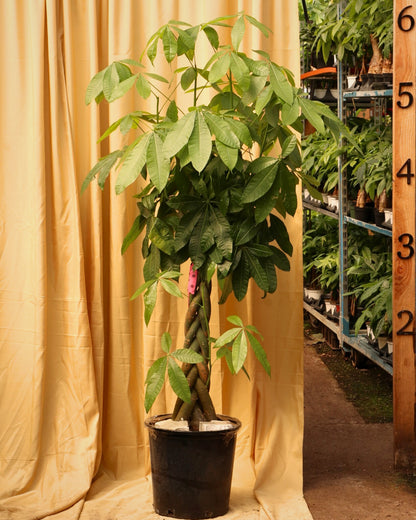
plants that sell for alot of money 5-7ft Tall Money Tree: Good Luck and Great LooksIf youre looking for good luckand a large houseplantthen look no further. Mr. Money Trees beautifully braided, swirling trunk traps good fortune. Not just good luck, but also a good income. Its leaves grow in groups of six, possibly representing six figures. Plus, the whole thing just looks striking. Money Tree benefits Some say a Money Tree can even promote healthier sleep, reduce stress, and decrease conflict in the home. We cant confirm the science
If you’re looking for good luck—and a large houseplant—then look no further. Mr. Money Tree’s beautifully braided, swirling trunk traps good fortune. Not just good luck, but also a good income. Its leaves grow in groups of six, possibly representing six figures. Plus, the whole thing just looks striking.
Money Tree benefits
Some say a Money Tree can even promote healthier sleep, reduce stress, and decrease conflict in the home. We can’t confirm the science behind those beliefs, but research does suggest that the Money Tree is an effective air purifier.
Place this adorable plant beside your bed at night, and take a deep breath. You just might sleep better and feel at ease, and you’ll definitely be breathing in cleaner air!
The Money tree looks cool
Scientifically known as the Pachira Aquatica, the Money Tree is a wetland plant native to Central and South America. Each “Money tree” is actually made up of multiple Pachira Aquaticas, gently hand woven together as they grow to maturity. Thanks to the Money Tree’s umbrella-like foliage, the plant’s swirling trunks look like they’re dancing in the rain, adding whimsy and romance to your indoor garden.
The Money Tree is pet-friendly and non-toxic
Money Trees are non-toxic to cats and dogs. We can’t stop your pet from nibbling on your precious Money Tree, but it won’t end in their demise. (We’ll send all the good vibes to your devoured Money Tree, though).
Lighting
Money Trees love low-light spots, even really low light, and they’ll bring you joyful thoughts even from a shady corner—or in bright indirect light. Money can’t buy happiness, but it can buy plants, which is almost the same thing?
Watering
Most houseplants can’t tolerate much trial and error when it comes to watering. But the Money tree is flexible! Money trees kinda like damp soil (they’re native to swampland after all), so overenthusiastic watering generally won’t kill them.
Pick your exact Money tree
Now that you're an expert with the Money Tree, order this plant by 7pm ET to get this plant shipped out of our greenhouse in New Jersey tomorrow. (Wondering when it will arrive? Check with the zip code validator on top of the “Add To Cart” button.) We’ll deliver your Money Tree in our sustainable, super-secure packaging system, no matter where you live in the U.S. Your plants will arrive safe and intact!
Hop on a video call to select your Money Tree, and we WILL send out the EXACT plant that you picked out, just like if you picked it up at a local nursery or garden center. Except we have more and fresher plants to choose from, and you can't find our PAFE fine ceramic planter options anywhere other than our website. :)
For any other questions or concerns, please don't hesitate to reach out to us at [email protected] or call/text (609)-968-7063! Or if you want to learn more about the Money Tree, keep scrolling!
Money tree benefits
What is a Money tree good for?
The Money tree looks awesome, purifies the air, brightens your home, and—maybe—brings good fortune. That’s a legend, but nobody said legends can’t be based on truth! You should probably test it out, to be on the safe side.
Does the Money tree clean the air or give oxygen?
The Money tree cleans carbon dioxide from the air and replaces it with nice fresh oxygen for us to breathe. It also sucks up chemicals like formaldehyde and benzene, plus other synthetic chemicals from cleaning products, leaving the air cleaner.
Are Money trees easy to keep alive?
Money trees are very low maintenance. They’re not too fussy about their watering schedules or their lighting. However, everyone has something, and Money trees do prefer a narrow range of temperatures (65-75). They also want some humidity. But that’s all.
Money tree care
How often should I water my Money tree?
Water your Money tree every week or two—more often during the spring and summer, and less often in the fall and winter. The Money tree tolerates overwatering better than underwatering, but make sure you’re using well-draining soil.
How do I keep my Money tree happy?
It’s pretty easy to keep a Money tree happy! Water every week or two. Put it anywhere indoors except in direct sun. And sing it a lullaby every night at bedtime. Even easy-care plants don’t mind a little pampering.
Where should a Money tree be placed in the house?
Most importantly, place the Money tree wherever it can get the right lighting—anywhere from bright indirect light to truly low light. But traditionally, for the best luck, the Money Tree is placed in the southeast section of your home.
Do I need to fertilize my Money tree?
Fertilize your Money tree once a month during spring and summer, when it’s really growing. You can use a general-purpose fertilizer—it’s not a picky eater—but dilute it to half-strength and make sure the soil is wet before applying.
What temperature do Money trees like?
The Money tree is a bit fussy, liking a narrow range of indoor temperatures: 65 to 75 degrees. So keep your home at moderate temps year-round. (Finally, you can tell your spouse or Dad to turn up the heat.)
Can Money trees grow without sunlight?
Money trees can live happily in a dark room with little natural light. So if you have a room with teeny tiny windows, or your neighbor’s way-too-close apartment blocks the sun always, it’s ok—Mr. Money tree will be fine.
Should I spray water on my Money tree?
The Money tree does enjoy humidity, and its leaves will get crinkly in low humidity. However, there’s some debate over whether misting helps or not. To be on the safe side, if you live in low humidity, get a humidifier.
Money tree factoids
Why does the Money tree have 6 leaves?
Some say the six leaves symbolize six figures—in other words, the luck from the Money tree might lead to your next promotion. (It’s us, we’re the ones who say that.) No promises, but work really hard just in case.
What is the superstition about Money trees?
Legend says that having a Money tree in your home will bring good luck and possibly even financial fortune. We prefer “legend” over “superstition” because it sounds fancier and makes us look cooler for believing in it.
Is there a difference between a Money tree and a Money plant?
Yes, the Money tree and the Money plant are totally different species. The Money tree is officially Pachira Aquatica, and the most common money plant, the Chinese Money plant, is Pilea Peperomioides—and it’s a small plant, not a tree.
Is the Money tree good for feng shui?
The Money tree is powerful and meaningful in feng shui, especially if you place it in the southeast area of your home. It symbolizes personal and professional growth and is said to bring good fortune to you and your family.
Do Money trees bloom?
In the wild, Money trees often boast glorious fluffy orange blossoms. But that only happens because they’re pollinated by bats. Assuming you don’t keep any bats inside (weirdo), your Money tree is very unlikely to bloom indoors.
How often do Money trees grow money?
Sadly, the legend that Money trees bring wealth and fortune is more of a metaphor than a practical promise. None of our Money trees have ever grown cash, and if they start, we won’t sell them to you anymore!
Why is it called a Money tree?
The Money tree gets its name from the legend, myth, or superstition that it brings financial luck to its owner or household. However, it’s not literal; Money trees don’t grow money (and no one will pay you to own one).
How long do Money trees live indoors?
Even indoors, a Money tree can live ten years or even longer. Of course, it requires TLC, but it’s an easy-care plant so that’s not a tall order. The Money tree will be your botanical companion for a decade.
Shipping Notes
- Free Standard Shipping on $100+ Orders to the USA.
- Except Preorder products are shipped in 48 hours.
- Delivery to the USA:
- Standard Shipping : 3-10 business days
- If time is of the essence, please consider selecting expedited delivery for faster service.
Exchange/Return Notes
- We offer a 30-day return/exchange service after receiving.
- Final sale items are not eligible for returns or exchanges.
- To process your return/exchange, please contact us at [email protected]
- Please click here for more details>>> Return & Exchange Policy